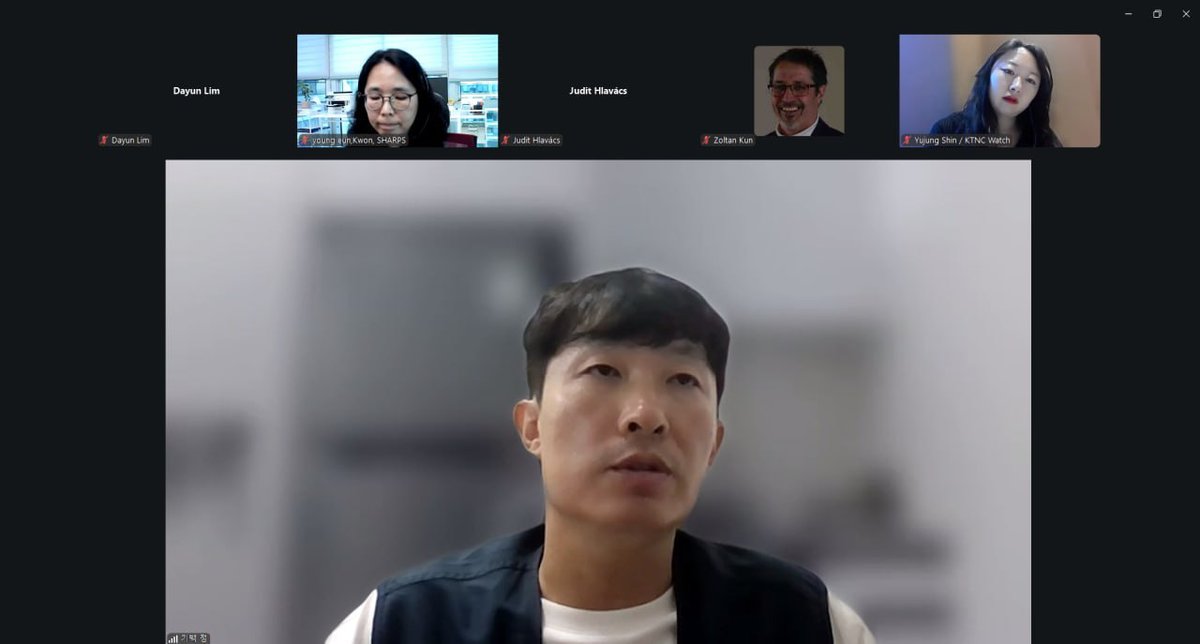
Hungarian residents raise concerns over environmental pollution, noise, hazardous chemical exposure, and occupational accidents.
Speakers highlight the gap between Samsung SDI’s ESG and human rights commitments and realities on the ground, emphasizing the need for a Supply Chain Accountability (mHREDD) Act.
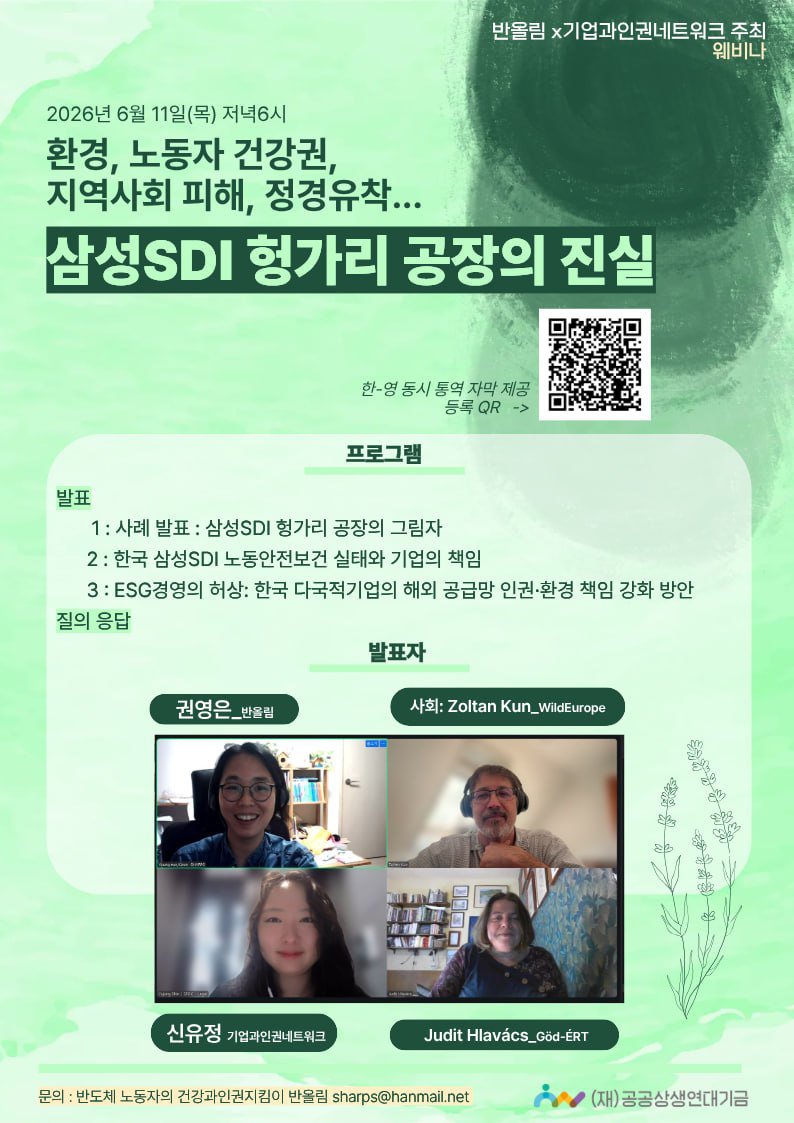
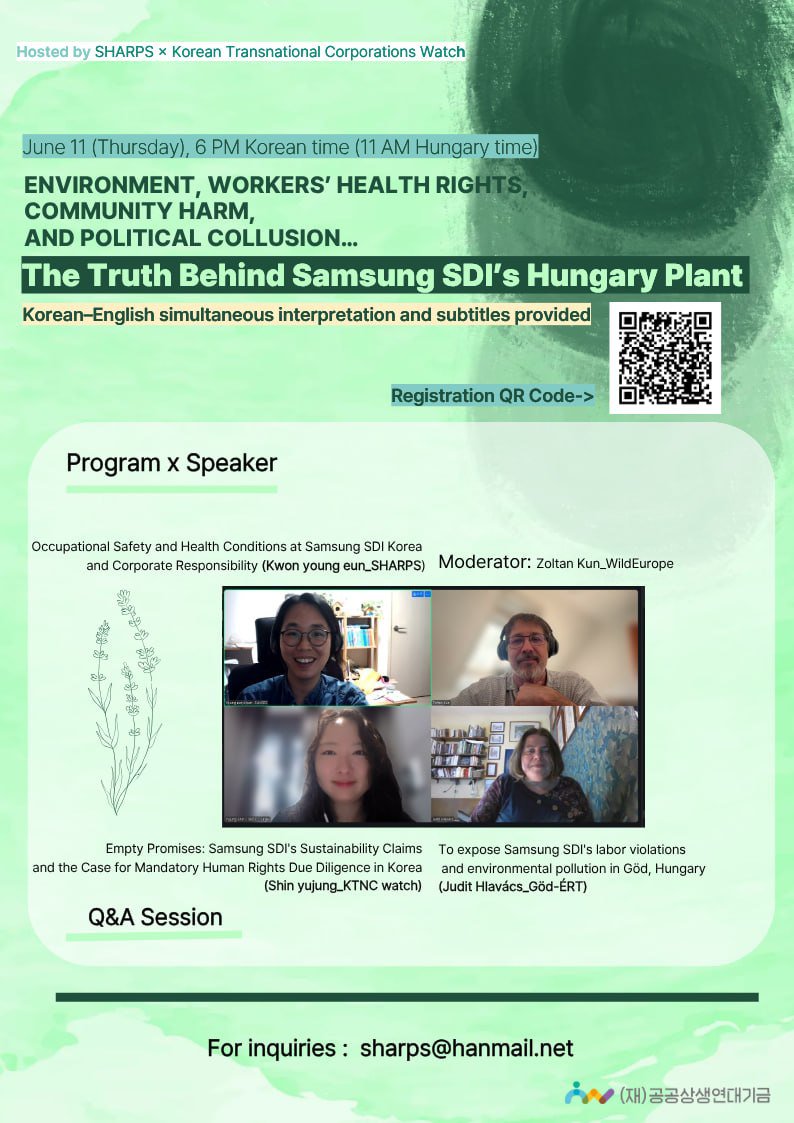
On June 11, 2026, at 6:00 PM Korea Standard Time, Supporters for the Health and Rights of People in the Semiconductor Industry (SHARPS) and Korean Transnational Corporations Watch (KTNC Watch)* hosted an international webinar entitled “The Truth Behind Samsung SDI’s Hungary Plant.” The webinar examined allegations of environmental pollution, violations of workers’ rights to health and safety, and harm to local communities associated with Samsung SDI’s battery plant in Göd, Hungary. It also provided an opportunity to share the experiences of Korean civil society in holding Samsung accountable. Participants discussed the limitations of existing ESG and corporate human rights management frameworks and stressed the need for legislation requiring mandatory human rights and environmental due diligence throughout corporate supply chains.
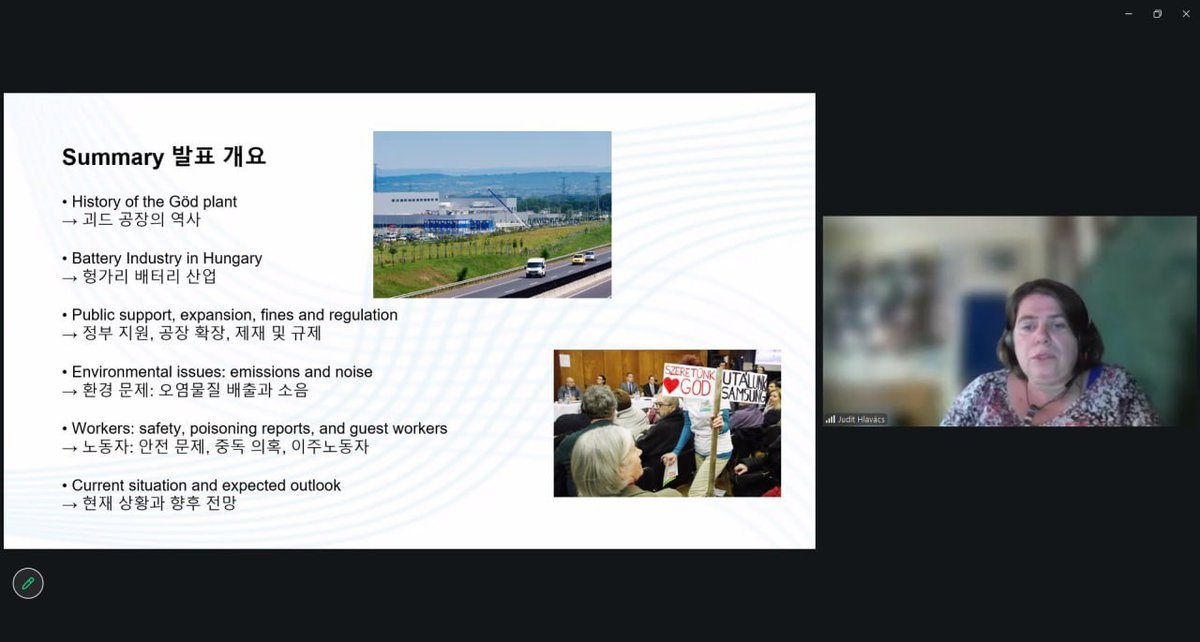
The webinar began with a presentation by Judit Hlavács, an activist from Göd-ÉRT Association, a local residents’ organization in Göd, where Samsung SDI’s plant is located. She shared information about the problems associated with the factory and the community’s efforts to address them through grassroots organizing.
According to Hlavács, the government of former Hungarian Prime Minister Viktor Orbán actively supported foreign battery manufacturers, including Samsung SDI, through infrastructure investments, expedited permitting procedures, and regulatory concessions. The total amount of public support provided to Samsung SDI is estimated to be at least €174.6 million.
Residents of Göd have raised concerns regarding environmental contamination linked to Samsung SDI’s operations. N-Methyl-2-pyrrolidone (NMP), a toxic substance suspected of causing cancer, was reportedly detected in groundwater and wastewater near the factory. Noise levels repeatedly exceeded legal limits. Firefighting foam was found in nearby rainwater drainage channels, and residents have also alleged emissions of heavy metals such as nickel and cobalt into the air.
Serious concerns have also been raised regarding worker safety. In 2022, Samsung SDI Hungary was fined €10,000 for violations of fire safety regulations. According to Hungarian media outlet Telex, workers were exposed to hazardous substances, including nickel and cobalt dust, between 2021 and 2023. Workplace accidents reportedly included workers becoming trapped in machinery and suffering electric shocks from high-voltage equipment.
In response, local residents formed the Göd-ÉRT Association in 2020 and actively pursued complaints regarding environmental pollution. The association also filed a lawsuit seeking the revocation of the plant’s environmental permit. In October 2025, a Hungarian court ruled to revoke the permit; however, in February 2026, Hungary’s Supreme Court overturned the lower court’s decision and remanded the case for further proceedings. The litigation remains ongoing.
Following years of advocacy, a Göd Residents’ Forum was held on May 29, providing a platform for dialogue among local residents, Samsung SDI representatives, politicians, and experts. While Samsung SDI acknowledged certain noise-related issues and committed to holding regular forums, residents continue to demand concrete corrective actions.
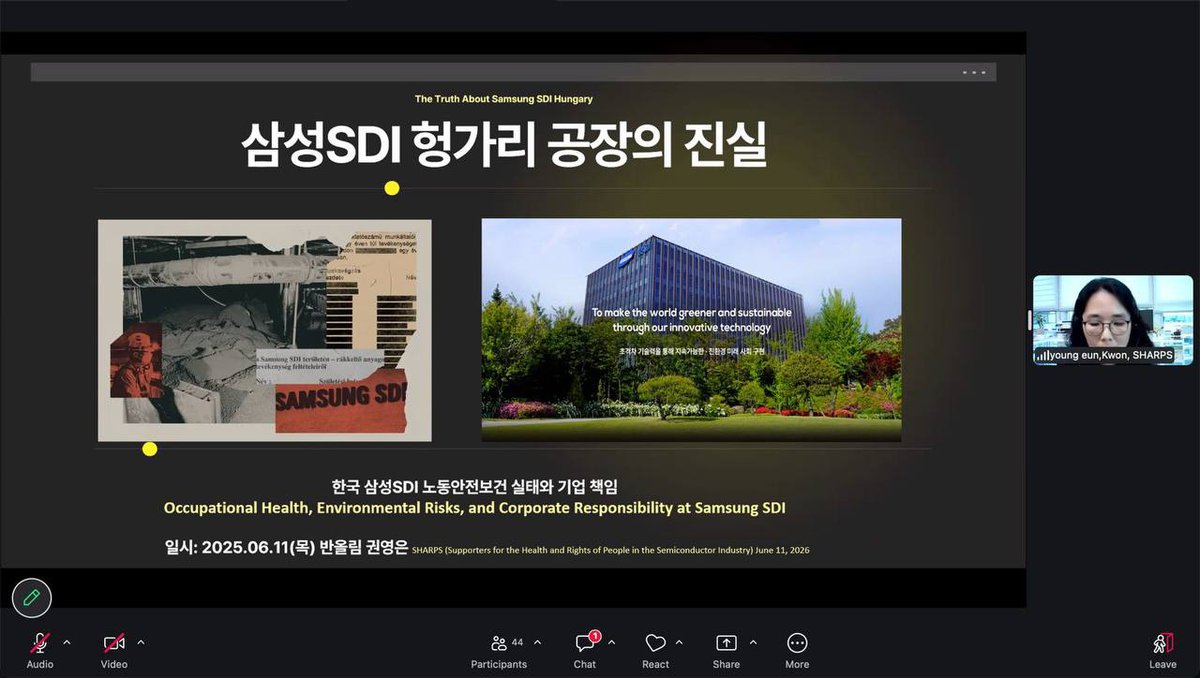
The second presentation was delivered by Young-Eun Kwon of SHARPS. She shared the history of workers’ struggles to gain recognition of occupational diseases at Samsung Electronics semiconductor plants as industrial accidents. Kwon also highlighted concerns regarding hazardous chemical use, formalistic occupational safety training, and “presenteeism”—a workplace culture in which employees continue working despite illness—at Samsung SDI facilities in South Korea.
She further discussed cases demonstrating how environmental and occupational risks are outsourced throughout global supply chains. Examples included the mass death of approximately 10,000 fish in a stream near a Samsung Electronics facility in Suwon and incidents in which Samsung’s factories and suppliers in Vietnam allegedly failed to install adequate air pollution control equipment and discharged wastewater containing hazardous chemicals. Kwon also pointed to the outsourcing of dangerous work to second- and third-tier subcontractors as a recurring issue in occupational health and safety.
Kwon argued that a Supply Chain Accountability Act is necessary to prevent the outsourcing of risk and to ensure that multinational corporations can no longer evade responsibility for human rights abuses and environmental damage occurring throughout their global supply chains.
Jung Gi-Baek, Secretary-General of the Samsung SDI Cheonan Branch of the Korean Metal Workers’ Union, then shared his experiences from the workplace. He noted that Korean Samsung SDI factories had also faced numerous occupational health and safety challenges, including exposure to chemicals such as NMP, work in high-temperature environments, and tasks performed at dangerous heights. However, he explained that significant improvements had been achieved through cooperation with civil society organizations, including SHARPS, and local community groups. Having heard the situation in Göd, he expressed concern that Samsung SDI’s management practices there appeared inadequate.
Jung also expressed hope that the recently established Samsung SDI labor union in Hungary would be able to provide direct safety training to workers and serve as an independent mechanism for monitoring and holding the company accountable. He pledged solidarity with Samsung SDI workers and residents in Göd and emphasized a shared sense of responsibility toward addressing these issues.
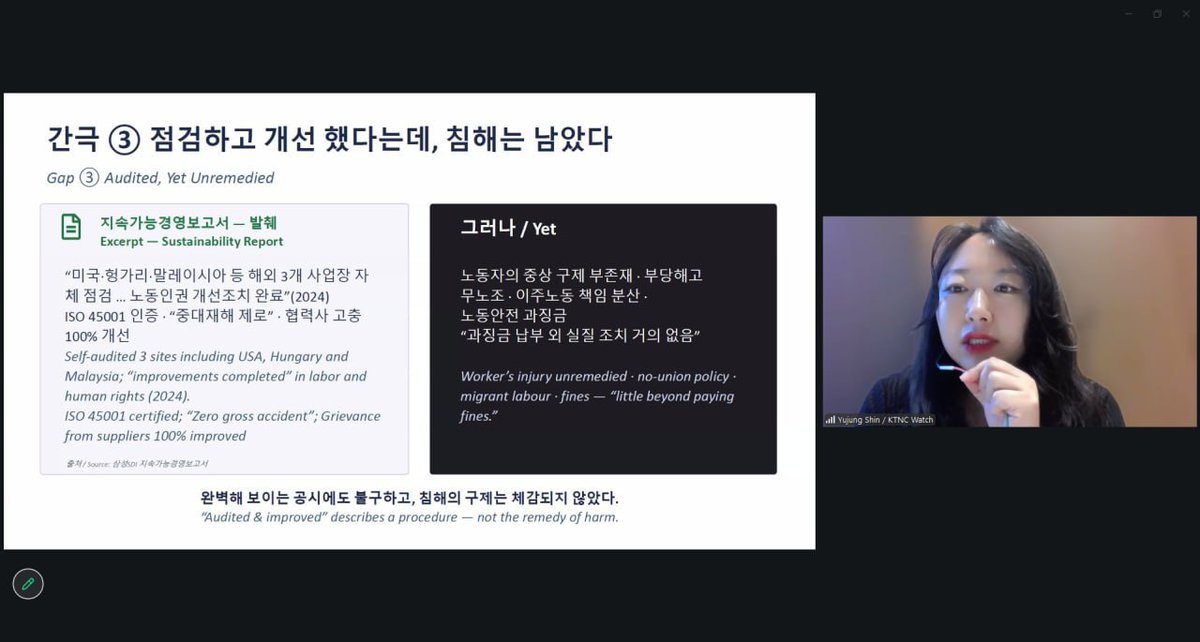
The final presentation was delivered by attorney Yujung Shin of KTNC Watch, who discussed the realities of ESG management and the need for supply chain accountability legislation. Shin pointed out that Samsung SDI receives high ESG ratings and publicly endorses international standards such as the UN Guiding Principles on Business and Human Rights (UNGPs) and the OECD Guidelines for Multinational Enterprises on Responsible Business Conduct. However, she highlighted the disconnect between these commitments and reports of workplace accidents, environmental contamination, and hazardous chemical exposure in Göd.
In particular, She noted that the international standards endorsed by Samsung SDI require companies to conduct human rights due diligence regarding harms they cause or contribute to. Nevertheless, effective due diligence mechanisms appear to be lacking, and residents have not been provided with accessible grievance mechanisms. As a result, systems intended to identify human rights impacts and provide remedies to affected individuals are not functioning effectively.
Shin argued that the proposed Supply Chain Accountability (mHREDD) Act**, introduced in June 2025 in Korean National Assembly, offers a solution to this gap. Had such legislation already been in force, companies would have been required to conduct human rights and environmental due diligence regarding overseas subsidiaries, establish stakeholder engagement and grievance procedures, and provide mechanisms for compensation and corrective measures for victims.
During the discussion session, participants asked whether a Korean Supply Chain Accountability Act could apply to harms occurring in Hungary. Shin explained that one of the core problems the legislation seeks to address is the lack of legal accountability for parent companies when human rights abuses occur at overseas operations. Under the proposed law, multinational corporations would be required to identify, prevent, and take responsibility for human rights violations occurring in the operations of overseas subsidiaries and business partners, and to ensure that victims have access to effective remedies.
More than 50 people participated in the webinar. Participants described the event as an important first step toward cross-border solidarity among labor unions, civil society organizations, and local communities in South Korea and Hungary. They committed to continuing cooperation and exchanges to address human rights abuses and environmental destruction linked to multinational corporations, including Samsung SDI, and to ensure that the voices of affected communities are heard and respected.
Korean Transnational Corporations Watch (KTNC Watch): As Korean corporations increasingly expand overseas, concerns regarding labor rights violations, human rights abuses, and environmental destruction have also grown. Problems include union-busting, wage theft, violence, and unfair dismissals targeting low-wage workers in developing countries, as well as human rights violations against Indigenous peoples and environmental destruction associated with large-scale development projects. KTNC Watch is a coalition of Korean human rights, labor, environmental, and public-interest legal organizations formed to respond collectively to these issues arising from the overseas activities of Korean corporations.
** Supply Chain Accountability (mHREDD) Act: Proposed legislation that would require companies to identify, prevent, mitigate, and remedy human rights and environmental risks throughout their supply chains through mandatory human rights and environmental due diligence. KTNC Watch, together with National Assembly Member Tae-ho Jung, has introduced the “Act on the Protection of Human Rights and the Environment for Sustainable Corporate Management” and is actively campaigning for its enactment.